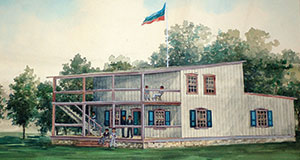
The Club was originally located in Wynnewood on an estate owned by Colonel Owen Jones, who was the father of one of the Club’s founders, J. Aubrey Jones. The site lacked an actual clubhouse as well as a regulation cricket pitch. Regardless, the founders enjoyed their new home.
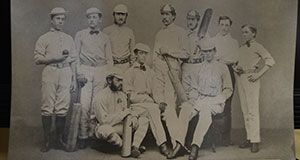
In the Club’s first-ever match, the Merion XI defeats Dorian XI of Haverford College in May 1866. In the coming years, the Merion XI traveled overseas on several occasions to compete against some of England’s most well-known and storied cricket clubs.
As the Club had outgrown the Wynnewood location, Rowland Evans and William Montgomery purchased five acres in Ardmore, which they leased back to the Club. Two additional acres were purchased in 1880 to accommodate tennis.
The Board purchased 12 1/2 acres in Haverford via the Haverford Land and Improvement Company from Wright Aldridge Properties for $150,000. The property was leased back to the Club for a period of 999 years. As an aside, the cost to board one’s horse and carriage was $25 per month.
The first Pennsylvania State Lawn Tennis Championship was contested at The Merion Cricket Club. It was part of the grass court tennis circuit, which was played at some of the more prestigious tennis clubs in the Northeast. Merion would host the PSLTC for an astounding 80 years.
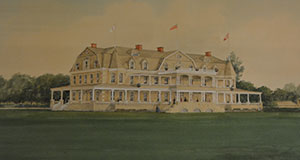
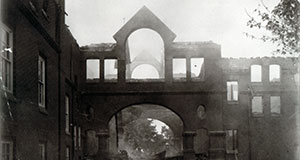
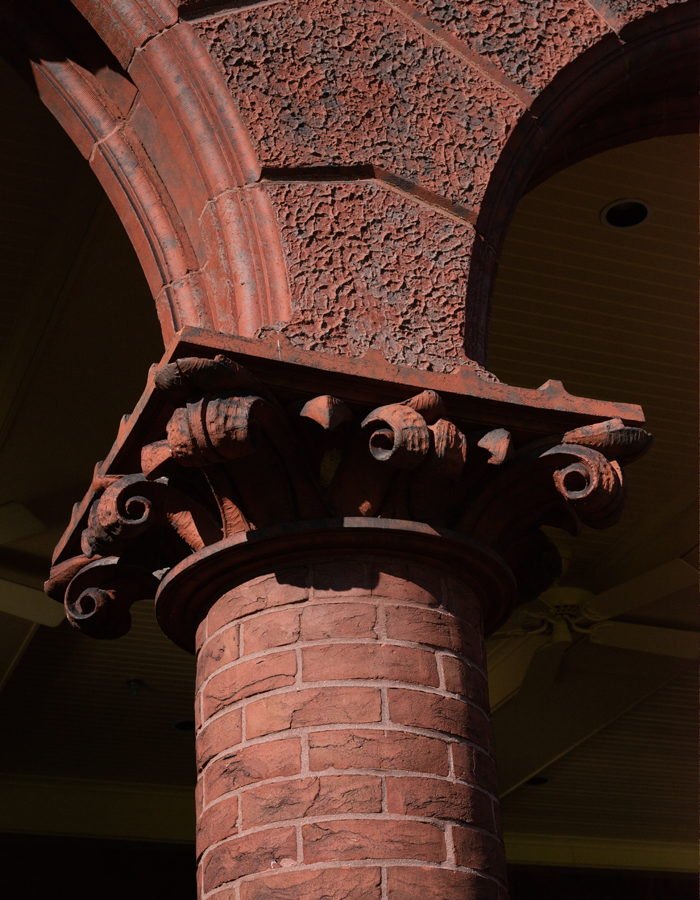
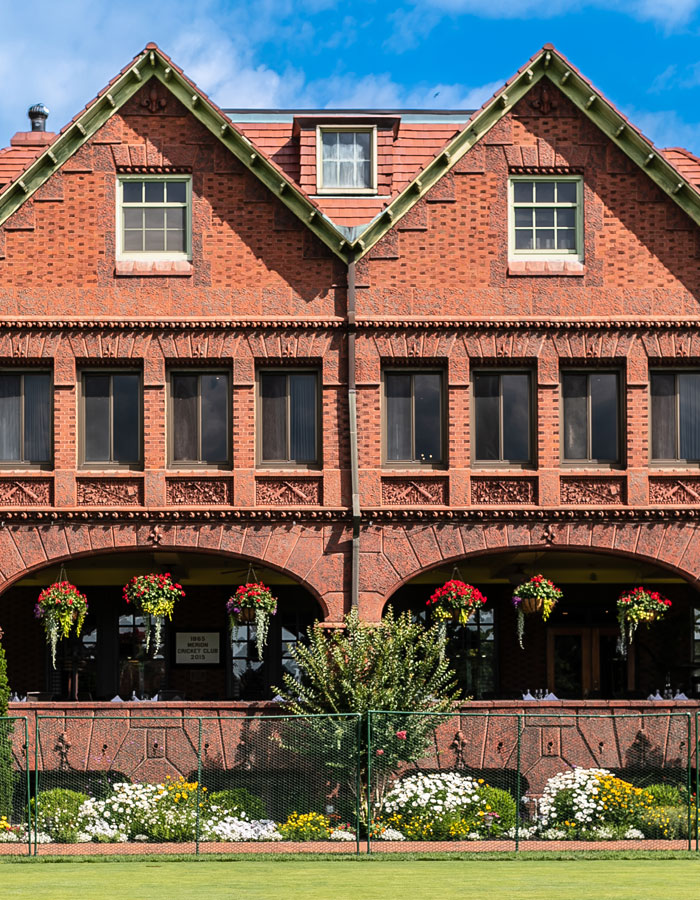
On January 4th, the clubhouse was destroyed by a fire. Frank H. Furness, a renowned Philadelphia architect, was hired to design the new clubhouse, which was also severely damaged by a second fire on September 24 of the same year. Amazingly, a scheduled cricket match between Philadelphia XI and Australian XI took place weeks later.
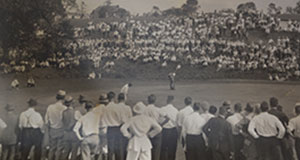
Golf began in 1896 with a 9-hole course northeast of Haverford. As the course became overcrowded, members leased property which is now home to Merion Golf Club. The East Course opened in September 1912; the West Course in 1914. In 1930, Merion hosts the U.S. Amateur Golf Championship which was won by the great Bobby Jones. He captured all four “majors” that year thus completing the Grand Slam and linking Merion to an incredible feat in sporting history.
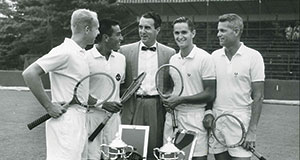
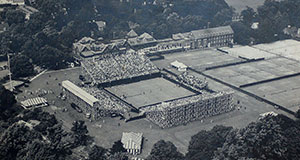
On the eve of war in Europe, Merion hosted the challenge round of the Davis Cup between the United States and Australia. Remarkably, 8,000 spectators were in attendance. The Philadelphia Inquirer noted afterwards that, “Although the cup was lost, the Merion Cricket Club made the round a happy occasion with the defeat leavened by gracious hospitality and a task well done.”
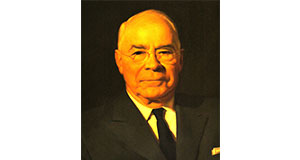
The lease for the Ardmore golf property between Merion Cricket Club Golf Association (lessor) and Merion Cricket Club (lessee) was dated July 19, 1911. On February 19, 1942, a resolution was unanimously adopted to discontinue operation of the Ardmore Golf House by Merion Cricket Club after February 28, 1942. As president of both clubs, J. Howard Pew was instrumental in keeping both facilities operating during difficult financial times.
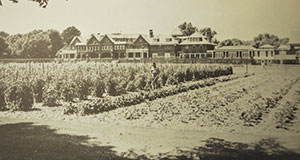
At the board meeting on April 28, 1943, grounds committee chairman, Griscom Bettle, mentioned that an arrangement had been made whereby “part of the tennis court layout amounting to 2 ½ acres has been cultivated and will be planted with certain vegetables, which will be made available to the house committee for the Club’s restaurant.”
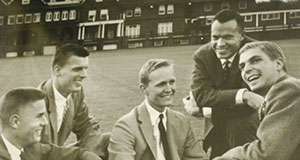
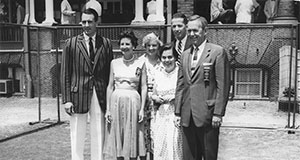
In 1961, five Club players won five national championships, an achievement recognized by Sports Illustrated. Benjamin Heckscher won the National Amateur Singles; G. Diehl Mateer, Jr. (National Open); John F. Hentz and G. Diehl Mateer, Jr. (National Doubles); Stephen Vehslage (National Intercollegiate); and James Zug (National Junior) – reinforcing the Club’s reputation as the epicenter of squash in America.
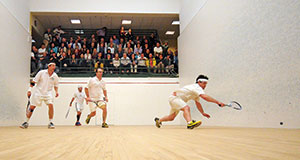
Until 1962, Merion had never hosted a prominent national squash tournament. With encouragement from the Club’s board, John Hentz and Frank Vehslage scheduled the inaugural William White for February 17-18, 1962. A total of 37 players entered that year. Held annually in early January, more than 260 players compete in Merion’s signature squash event. A black tie gala during the tournament weekend highlights this memorable three-day occasion.
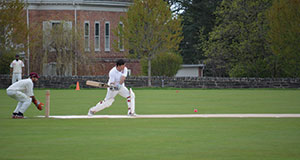
By the mid 1920s following the first World War, cricket had become virtually non-existent at Merion. Finally, in the early 1970s, the game was resurrected by a small group of members headed by E. Rotan (“Tanny”) Sargent. In 1972, with a $300 loan from the Club authorized by then club president Watson “Pat” Malone, cricket’s revival on Montgomery Avenue was underway.
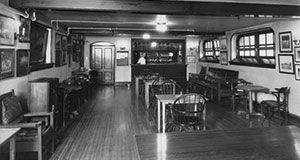
An area for families to enjoy casual dining was created in the basement of the clubhouse. With sometimes hundreds of meals served daily for adults and children, alike, securing a table was not always easy. This subterranean locale featured an oyster bar as well. Three decades later, The Cricket was rebuilt upstairs in what was the club’s formal dining room and part of the enclosed porch.
After an 80-year run that began in 1894, the final Pennsylvania State Lawn Tennis Championship was contested at Merion. Played two weeks prior to the National Open at Forest Hills in New York, Merion’s tournament provided players the opportunity to hone their game in this nationally recognized tennis championship. The tournament’s longtime chairman was William Clothier II, who oversaw all aspects of this prestigious event from 1948-1974.
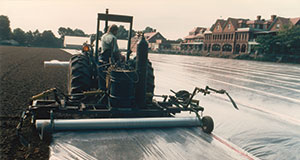
An inadequate drainage system and an infestation of thatch necessitated the replacement of grass covering the Great Lawn in 1986. Eight truckloads of sod were removed and then dumped into the quarry on the 16th hole at the Merion Golf Club. The Great Lawn’s soil was covered in industrial plastic with methyl bromide gas pumped in underneath to sterilize the dirt. It was reseeded that August with a Penncross Creeping Bent grass and was ready for play in the spring of 1987. Merion’s Great Lawn has a reputation as being one of the finest grass tennis surfaces in the world.
After several years of planning, numerous renovations were completed effecting the main areas of the Clubhouse. During this time, a pivotal change occurred in dining as the Club’s formal restaurant was transformed into a more casual dining experience with an enclosed porch overlooking the Great Lawn. Additionally, the Furness Room now features an intimate restaurant and bar. The elegant interior and dark hues offers a warm atmosphere for members to congregate and enjoy each other’s company.
Reaching the 150-year mark is an astounding achievement for any organization, and The Merion Cricket Club is no exception. Merion joins a short list of clubs in the United States that can claim such an honor. Through appreciating and preserving its heritage and traditions over the past century and a half, The Merion Cricket Club is in a class by itself. The Club celebrates this unique achievement in typical grand style in 2015.
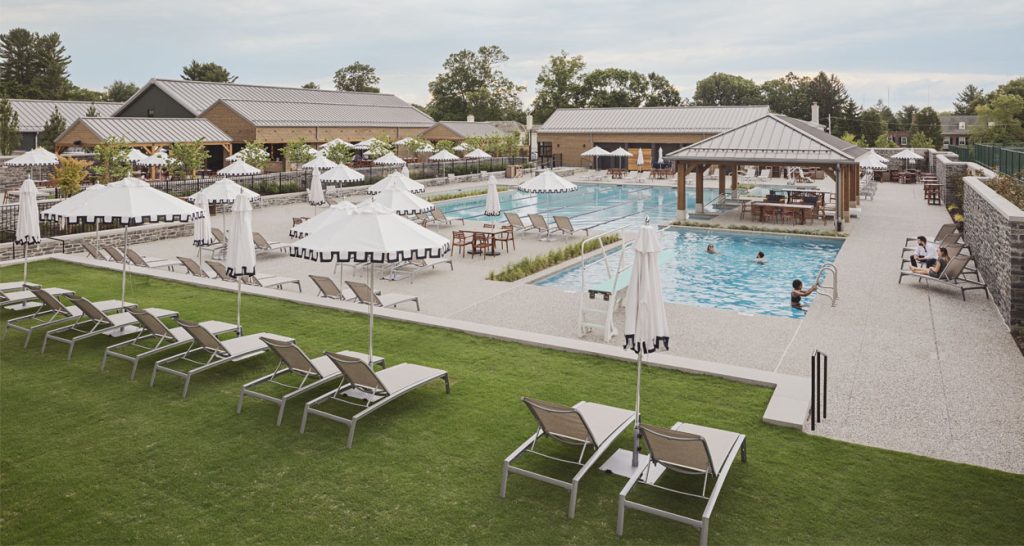
After the purchase of 12 properties beginning in 1997 and years of thorough research, the Campus Master Plan was born in 2015 with a two phase implementation. Phase I (2018 – 2019): New Men’s Locker Room facility, Squash Center and new courts, expanded Ladies’ Locker Room, Fitness Center, renovated Living Room, and accessibility enhancements to the entrance. Phase II (2019 – 2020): a sleek new Paddle Pavilion and additional court, 2 new tennis courts, and the long-awaited – MCC Pool, which opened during the summer of 2020. The Club continues to maintain a long-term vision focused on being a premier private club.
The formation of The Merion Cricket Club in the fall of 1865 might best be depicted on a canvas splashed in the fall colors of the Blue Ridge Mountains of Berks County, Pennsylvania. It was there, along a hiking trail one afternoon, that William Montgomery and Maskell Ewing hatched the idea of forming a cricket club. Youthful and energetic, they returned home to Philadelphia and convinced some of their friends to join the cause. In two short months, the assembled group realized their dream.
Club records indicate the sixteen young men, ranging in age from fourteen to twenty-two, held their inaugural meeting at Glenays, the country home of Richard R. Montgomery, Esq., located near Bryn Mawr. It was there the Philadelphia brethren formed an association dedicated to the playing of cricket at least once a week. After an extended discussion, it was agreed by all those in attendance to name the new organization The Merion Cricket Club.
In its storied history, Merion has enjoyed three different suburban locales along Philadelphia’s Main Line. The first was in Wynnewood (1865-1872) followed by nineteen years in Ardmore
(1873-1892) and finally its present location in Haverford beginning in fall of 1892.

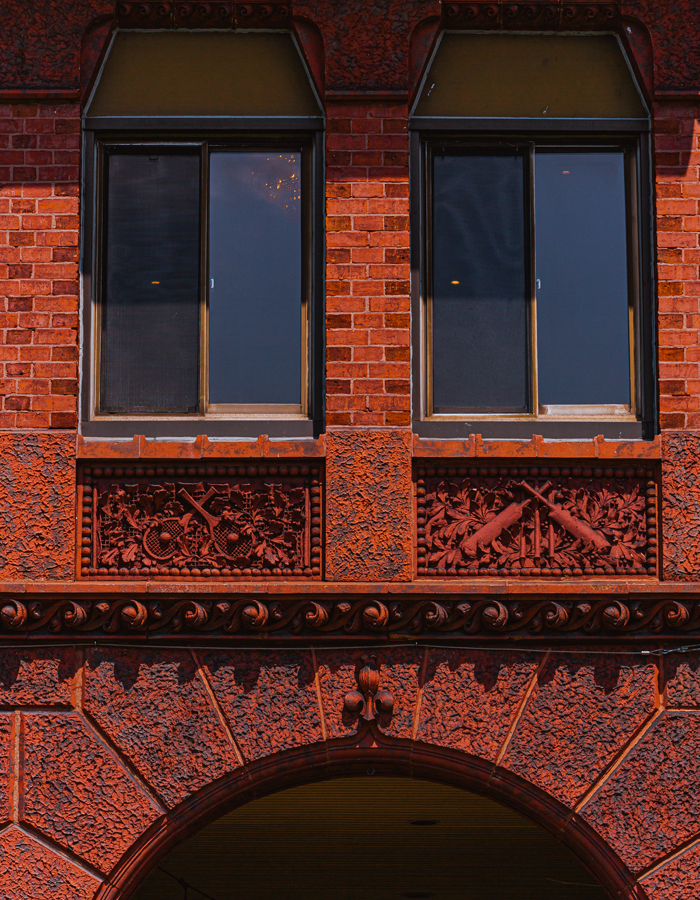
By the turn of the twentieth century, the Merion Cricket Club had established itself as one of the premier amateur sporting clubs in the country. In addition to hosting numerous social events, the members and staff were kept busy with the many new athletic activities introduced to the roster. Besides cricket, golf, soccer and field hockey, just to name a few, Merion became the epicenter for championship-caliber tennis and squash, an accolade it still enjoys today. Among other national events, the club hosted the prestigious Pennsylvania State Lawn Tennis Championships for eight decades (1894-1974) and has been the home to the renowned William White & McRory-Tully Memorial Squash Tournament for more than fifty years.
Today, hundreds of family members, children included, participate in a plethora of tennis and squash camps that the club offers. Interclub competitions between Merion and area clubs fill the club’s athletic calendar year-round. Add paddle tennis and croquet to the sports roster, and Merion has the bases covered.
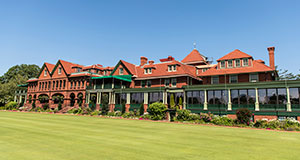
Athletic endeavors naturally grab the spotlight, but they are not the only aspect that characterizes life at the club. Merion’s grand clubhouse and spacious Great Lawn are more than simply physical landmarks on a sixteen-acre plot of land. They represent a welcoming place for members to form and nurture the bonds of friendship and camaraderie, generation after generation.
The old world architecture and welcoming interior of Merion’s clubhouse provide a connection to its storied past while paying tribute to its present. The “home-away-from-home” aura manifests itself in numerous social functions held at this venerable club. From casual gatherings in the Courtside Cafe to dinner in The Cricket to formal galas in the club’s Ballroom, the welcome sign is always displayed. Combined with the social blending of the generations, as well as the dedication and professionalism of the devoted staff, Merion is in a league of its own.